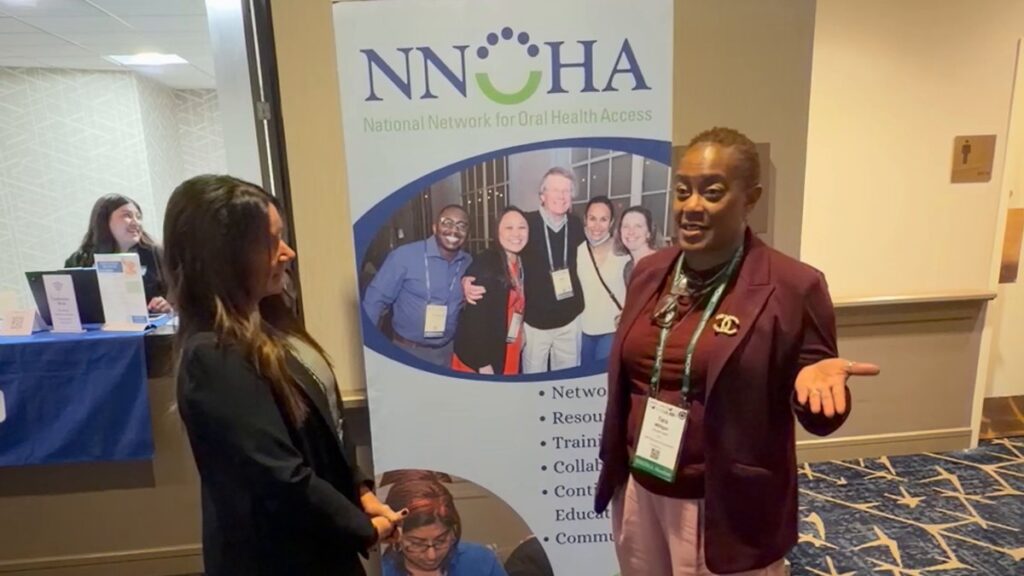
At the NNOHA conference, Jazz’s Sarah Rosema sat down with Dr. Tara Milligan, Dental Director at Health Services Inc., a federally qualified health center in Montgomery, Alabama. When Dr. Milligan joined Health Services in January, the clinic was using DEXIS sensors. She pushed to move to Jazz, and in a few minutes on camera she explained why.
Her reasons will sound familiar to anyone running a community health dental program: how the sensors are paid for, what happens when one has a problem, the support behind them, and whether the team is comfortable with the change.
Dr. Milligan didn’t come to Jazz cold. She started using Jazz sensors about two years ago at her former FQHC, so she had already worked with them day to day in a community health setting.
When she arrived at Health Services and found the team on DEXIS, she spoke up right away:
“I told them, I said, we need to switch over to Jazz when we’re using DEXIS.”
That recommendation came from experience, not a sales pitch. She had seen how Jazz worked at one FQHC and wanted the same setup at her new one.
Every FQHC dental program works within a budget that has to stretch across patients, staff, supplies and equipment. For Dr. Milligan, the issue with the DEXIS sensors was the money required up front. She said that upfront cost was simply too much for a community health care budget.
Jazz offered a different path: sensors by subscription instead of a large upfront purchase. Dr. Milligan described that as the better option for her organization.
For administrators, that distinction matters. A subscription means a health center doesn’t have to commit a large share of its equipment budget all at once just to get sensors into its operatories.
Sensors get used constantly in a busy clinic, and issues happen. What Dr. Milligan values is what comes next: when Health Services has a problem with a sensor, Jazz replaces it.
For a community clinic, a sensor that’s out of commission can mean rescheduled patients and a scramble to cover chairs. Knowing replacements are part of the arrangement takes some of that worry off the dental director’s plate.
Then there’s the support itself, which she summed up in one line:
“The support we get is awesome.”
— Dr. Tara Milligan, Dental Director, Health Services Inc.
Jazz sells direct, so when Health Services has a question or needs help, they work with Jazz itself.
Any equipment change in a clinic is ultimately a change for the staff. Assistants and hygienists are the ones placing sensors and capturing images all day, so their buy-in matters.
According to Dr. Milligan, the staff are very happy with Jazz. She also told her team that you can’t tell the difference between what they were using before and what they use now. In her view, the switch from DEXIS to Jazz has been seamless.
Dr. Milligan’s experience touches on the questions many community health centers weigh when they reconsider their sensors:
At Jazz, we believe great imaging shouldn’t strain a community health budget. That’s what we mean by X-Rays Without Extortion.
If your health center, school program or public dental clinic is thinking about its next sensor decision, we’d be glad to talk through how Jazz could work for your team.

Jazz Owners Survey
You use Jazz every day, so your feedback shapes what we build next.

A $10 Starbucks e-gift card for the first 250 respondents.*
*Limited one response per office.